Source magnetic digital kitchen timer with clip for Cooking, Baking, and Industrial Use
Find 30 magnetic digital kitchen timer with clip options featuring magnetic, clip, and stand mounting. Compare OEM support, timing functions, and specifications from suppliers in Guangdong, China.
Key considerations
Products List





Comprehensive Sourcing Guide
Strategic Sourcing Guide for Magnetic Digital Kitchen Timers with Clip Mounting
Understanding the Product Category and Core Specifications
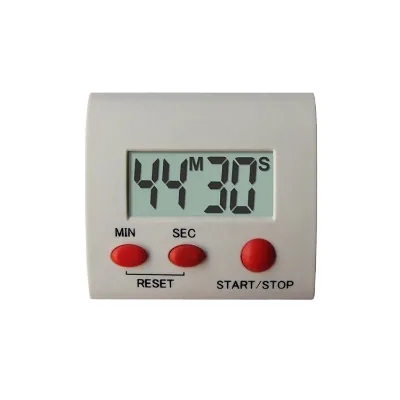
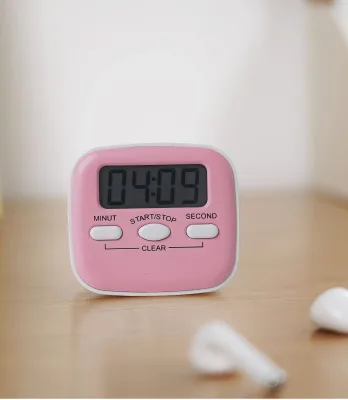
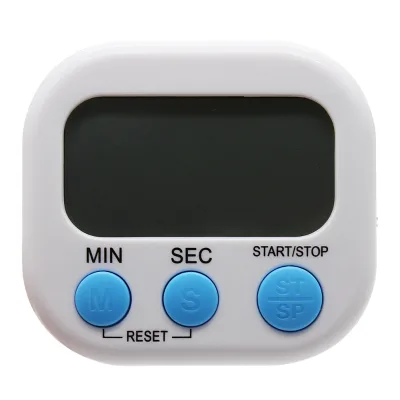
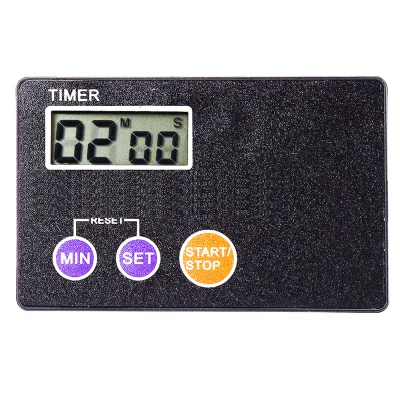
When sourcing a magnetic digital kitchen timer with clip mounting capabilities, buyers must first distinguish between consumer-grade kitchen appliances and industrial-grade timing devices that share similar form factors. The core product identified in current market listings is a compact electronic timer designed for versatile placement. The primary physical characteristic is the "3 way to place" capability, which explicitly includes magnetic mounting, clip mounting, and stand functionality. This tri-fold versatility allows the device to adhere to metal surfaces, clip onto oven racks or workbenches, or stand freely on a countertop.
The physical dimensions of the standard unit are approximately 77.5 x 70 x 24mm, a size that balances visibility with portability. The single package size is listed as 22.0 x 15.0 x 10.0 cm, indicating that the retail packaging is significantly larger than the device itself, likely due to protective foam or cardboard inserts. The device operates on a 1.5V AAA battery, a standard power supply that ensures longevity and ease of replacement for the end-user. The mechanism is electronic, utilizing a digital display to manage time. The maximum timing duration observed is 59 minutes and 99 seconds, a specific limit that suggests the device is optimized for short-to-medium duration tasks rather than continuous industrial monitoring.
Buyers should note that while the product name often references "kitchen timer," the functional specifications extend into industrial applications. The listed usage includes "Multifunctional, Industrial, Timer Switch, Time Counter, Electromagnetic Counter." This duality requires procurement teams to verify the specific firmware or hardware configuration intended for their use case, as a unit marketed for kitchen use may lack the ruggedization required for harsh industrial environments.
Technical Performance and Functional Capabilities
The functional architecture of these timers is defined by their ability to handle multiple counting theories. The primary theory is "Countdown," which is the standard mode for kitchen and industrial tasks. However, the device also supports "Addition Counter," "Subtract Counter," and "Reversible Counter" functions. This suggests a programmable logic that allows for complex timing sequences beyond simple countdowns. For instance, an addition counter could be used to tally multiple short intervals, while a reversible counter might allow for resetting and re-timing without power loss.
The alarm system is a critical component of the device's utility. The observed specification lists a "loud alarm," which is essential for kitchen safety and industrial alertness. In a noisy kitchen environment or a busy factory floor, a high-decibel alarm ensures the user is notified immediately when the set time expires. The device also features a "Fixed Time" capability of 1 hour in certain configurations, providing a preset option for standard tasks.
It is important to differentiate between the various model numbers observed in the market, such as OW-T1, TH-2210, DCS-2203, and others. While the OW-T1 is explicitly linked to the "mini magnetic digital kitchen timer" with the 3-way mounting system, other models like the TH-2276 or SAY-0022 may represent variations in the internal circuitry or the counter mechanism. Some listings mention a "SE PLC" (Programmable Logic Controller) type, which implies a higher level of programmability, though this may refer to a different product category entirely. Buyers must cross-reference the model number with the specific function list to ensure the device supports the required "Carry Mode" of "Synchronous Counter" or "Module-n Synchronous Counter" if batch processing is required.
Compliance, Certification, and Regulatory Standards
In the global B2B market, compliance is non-negotiable. The primary certification observed for these devices is the CE mark, indicating conformity with health, safety, and environmental protection standards for products sold within the European Economic Area. The listing explicitly states "CE / EU" as a certification attribute. While some background data mentions RoHS, the high-confidence facts only confirm CE. Buyers should verify that the specific batch they are purchasing carries the valid CE documentation, as this is often a requirement for customs clearance in Europe and other regions that recognize CE standards.
The product origin is consistently listed as Guangdong, China, a major manufacturing hub for electronics. The place of origin is a critical factor for supply chain logistics and potential tariff implications. The standard listed is "Small" or "customize," which refers to the product size or packaging standard rather than a safety standard like ISO. Buyers must clarify if the "Small" standard refers to a specific industry norm for compact timers or if it is a generic descriptor.
Regarding safety, the device is constructed from plastic, which is a common material for consumer electronics. However, for industrial applications, the flammability rating of the plastic casing should be verified against local fire codes. The warranty period is listed as 1 Year, which serves as a baseline for supplier reliability. If a buyer requires a longer warranty, this must be negotiated as a specific contract term, as the standard offering is one year.
Cost Drivers and Pricing Dynamics
The pricing for magnetic digital kitchen timers with clip mounting exhibits a wide range, observed between $0.49 and $5.88 USD. This significant variance is driven by several key factors. First, the order quantity (MOQ) plays a massive role. The observed MOQ range is 5 to 2000 units. Purchasing at the lower end of the spectrum (e.g., 5 units) will likely result in a price closer to the upper limit of the range, while bulk orders near 2000 units will drive the price down toward the $0.49 mark.
Second, the level of customization is a primary cost driver. The product supports both OEM (Original Equipment Manufacturer) and ODM (Original Design Manufacturer) services. A standard "neutral packing" unit will be cheaper than a unit with custom branding, custom packaging, or specific firmware modifications. The "Customization: Available" attribute confirms that buyers can request changes to the product appearance, logo, or even the packaging type (e.g., switching from neutral packing to OPP Bag).
Third, the specific model and its internal components affect the price. A basic countdown timer with a simple alarm will cost less than a unit with advanced counter functions (Addition, Subtraction, Reversible) and a synchronous carry mode. The power supply is standard (AAA battery), but if a buyer requires a rechargeable lithium-ion battery or a different voltage, the cost will increase. Finally, the "Single gross weight" of 2.000 kg per package indicates that shipping costs will be a significant factor in the total landed cost, especially for smaller orders where the weight-to-value ratio is high.
Supplier Evaluation and Procurement Strategy
When evaluating suppliers for these devices, buyers should focus on their ability to handle the "Customized" and "OEM/ODM" requirements. The brand name "OWAY" is listed, but buyers should not assume this is the only brand available. The market contains multiple model numbers (TH-2210, DCS-2203, etc.), suggesting a diverse supplier base. A reliable supplier should be able to provide samples that match the exact specifications of the ordered model, particularly regarding the "3 way to place" mechanism.
Buyers must verify the "Selling Units" attribute. The listing indicates "Single item," which means the product is sold individually. However, for B2B procurement, the supplier must be able to aggregate these into master cartons for efficient shipping. The "Packing: Customized" attribute is a key negotiation point; buyers should confirm if the supplier can provide bulk packing without individual retail boxes to reduce costs and waste.
The "Feature: Stocked" attribute suggests that some suppliers have inventory ready for immediate shipment, which can reduce lead times. However, for customized orders, lead times will vary. Buyers should explicitly ask for lead time estimates based on their specific MOQ and customization needs, as the provided data does not list a standard lead time. The "Market: Promotion" attribute indicates that these products are often used for promotional giveaways, which may influence the supplier's willingness to offer lower prices for large, branded orders.
Quality Control and Long-Term Procurement Considerations
Quality control for these timers should focus on the mechanical and electronic integrity of the device. The "Mechanism: Electronic" and "Theory: Digital" attributes require testing of the display and the battery contact points. A common failure point in magnetic timers is the strength of the magnet or the durability of the clip. Buyers should request test results or samples to verify that the magnetic hold is strong enough to support the device on vertical metal surfaces without slipping, and that the clip mechanism does not deform after repeated use.
The "Alarm: loud alarm" specification must be validated in the actual operating environment. A sound level that is adequate in a quiet kitchen may be insufficient in a noisy factory. Buyers should specify the required decibel level in their technical requirements if the standard "loud alarm" is not sufficient for their specific application.
Long-term procurement considerations include the availability of replacement parts, such as batteries or display units, though the device is typically a single-unit replacement. The "Warranty: 1 Year" is a standard term, but buyers should negotiate a replacement policy for defective units that arrive or fail within the warranty period. The "Customization: Available" feature also implies that the supplier should maintain a consistent supply chain for the customized components (e.g., logos, packaging) to ensure brand consistency over time.
Finally, buyers should be aware of the "Usage" diversity. A device listed for "Kitchen" use may be repurposed for "Industrial" use. If the device is intended for industrial environments, the "Plastic" material and "Electronic" mechanism must be evaluated for resistance to dust, moisture, and temperature fluctuations. The "Small" standard and "Common" appearance suggest a generic design, which may not be suitable for harsh conditions without additional protective measures.
Comparative Analysis of Product Variants
To assist in decision-making, the following table compares key attributes of the observed product variants based on the provided data. This comparison highlights the differences in model numbers, theories, and specific functions that may influence the final selection.
| Attribute | Model OW-T1 | Model TH-2210 / TH-2276 | Model DCS-2203 | Model SAY-0022 |
|---|---|---|---|---|
| Primary Name | Mini Magnetic Digital Kitchen Timer | (Generic Timer/Counter) | (Generic Timer/Counter) | (Generic Timer/Counter) |
| Mounting | Magnetic / Clip / Stand | Not Specified | Not Specified | Not Specified |
| Theory | Countdown | Mechanical / Digital | Digital | Digital |
| Function | Addition, Subtract, Reversible | Addition Counter | Addition Counter | Addition Counter |
| Power | 1.5V (AAA) Battery | Not Specified | Not Specified | Not Specified |
| Max Duration | 59 min 99 sec | Not Specified | Not Specified | Fixed Time: 1 Hour |
| Material | Plastic | Plastic | Plastic | Plastic |
| Packing | Neutral / Customized | Neutral Packing | OPP Bag | Customized |
| Certification | CE / EU | Not Specified | Not Specified | Not Specified |
This table illustrates that while the core functionality (counting and timing) is consistent, the specific features like "Fixed Time" or "Mechanical Theory" vary by model. Buyers must select the model that aligns with their specific operational needs, ensuring that the "3 way to place" feature is present if mounting flexibility is a requirement. The "CE / EU" certification is most explicitly linked to the OW-T1 model in the provided data, making it a safer choice for European markets if compliance is a primary concern.
Final Procurement Recommendations
In conclusion, sourcing a magnetic digital kitchen timer with clip mounting requires a careful balance of technical verification, compliance checks, and cost management. The wide price range and diverse model numbers indicate a flexible market, but also a need for precise specification definition. Buyers should prioritize the "3 way to place" functionality and the "CE" certification as baseline requirements. For industrial applications, the "Electronic" mechanism and "Loud Alarm" must be validated against environmental conditions. By leveraging the OEM/ODM capabilities, buyers can customize the product to their brand while maintaining the cost benefits of bulk ordering. Always request samples to verify the physical attributes, such as the magnetic strength and clip durability, before committing to a large order. The 1-year warranty provides a safety net, but proactive quality control during the manufacturing process is essential to ensure long-term reliability.
FAQs
How many placement options does the timer offer?
The timer offers three placement options: magnetic mounting, clip mounting, and a stand. This versatility allows it to adhere to metal surfaces, clip onto racks, or stand freely on countertops for various kitchen or industrial tasks.
What is the maximum timing duration available?
The maximum timing duration is 59 minutes and 99 seconds. This specific limit optimizes the device for short-to-medium duration tasks rather than continuous industrial monitoring or long-term cycle counting.
Can the device support addition and subtraction counting?
Yes, the device supports addition, subtraction, and reversible counter functions. These capabilities allow for complex timing sequences beyond simple countdowns, making it suitable for multifunctional and industrial counting applications.
What certification is required for European sales?
The product carries CE certification for the European Union. This mark indicates conformity with health, safety, and environmental protection standards required for products sold within the European Economic Area.
How is the device powered and what is the warranty?
The device is powered by a standard 1.5V AAA battery. It comes with a standard one-year warranty, which serves as a baseline for supplier reliability and defect replacement policies.
What is the typical MOQ range for bulk orders?
The observed minimum order quantity ranges from 5 to 2000 units. Purchasing at the lower end results in higher per-unit costs, while bulk orders near 2000 units drive the price down significantly.
Does the product support OEM and ODM customization?
Yes, the product supports both OEM and ODM customization services. Buyers can request changes to the product appearance, logo, and packaging type, such as switching from neutral packing to OPP bags.